
 Điện thoại
: +1 2403149021
Điện thoại
: +1 2403149021 Mail: kliu@jiechi.com
Điện thoại
: +1 2403149021Mail: kliu@jiechi.com


Hầu hết các quản đốc nhà máy đều có chung một tư duy thầm lặng.
Họ không đặt mục tiêu sàn nhà hoàn hảo.
Họ đặt mục tiêu sạch vừa đủ.
Sạch vừa đủ để sản xuất vận hành.
Sạch vừa đủ để vượt qua các đợt kiểm tra hàng ngày.
Sạch vừa đủ để tránh những mối nguy an toàn rõ ràng.
Bề ngoài, logic này nghe có vẻ hợp lý.
Nhưng trong sản xuất, "vừa đủ" lại là một trong những sai lầm vận hành chậm chạp và tốn kém nhất mà một cơ sở có thể mắc phải.
Bởi vì "sạch vừa đủ" tạo ra sự trôi dạt vô hình.
Những vấn đề nhỏ không được giải quyết.
Qua nhiều tuần và nhiều tháng, chúng tích tụ thành những vấn đề lớn hơn, gây hại cho an toàn, năng suất và tuổi thọ thiết bị.
Các tiêu chuẩn nhà máy không bao giờ sụp đổ trong một ngày.
Chúng bào mòn dần dần.
Một vết dầu nhỏ bị bỏ qua hôm nay sẽ trở thành một mảng bám cố định vào ngày mai.
Mảnh vụn "tạm ổn" dần dần tích tụ thành những lối đi lộn xộn.
Bụi mà không ai buồn dọn bắt đầu lan vào máy móc và bảng điện.
Mỗi vấn đề riêng lẻ có vẻ không đáng kể.
Vì vậy các đội ngũ tiếp tục chọn "sạch vừa đủ."
Nhưng kỷ luật vận hành giống như một đường cơ sở.
Một khi bạn chấp nhận những ngoại lệ nhỏ, đường cơ sở sẽ dịch chuyển xuống thấp hơn.
Chẳng bao lâu, điều từng không thể chấp nhận được trở thành bình thường.
Đó là cách các nhà máy dần dần mất đi tính nhất quán — ngay cả khi không có bất kỳ cuộc khủng hoảng đơn lẻ nào xảy ra.
Công việc thủ công có thể chấp nhận sự không nhất quán.
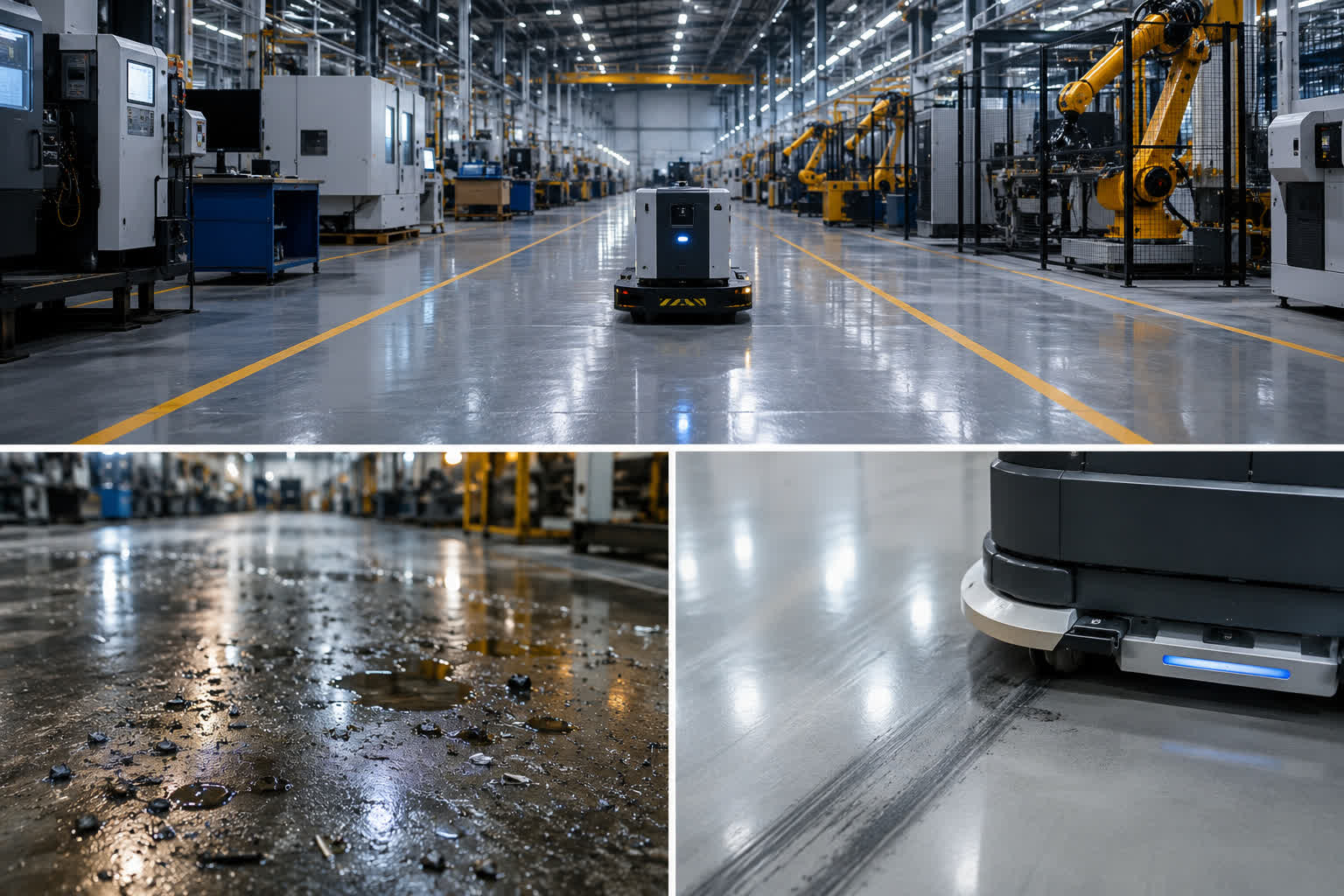
Con người có thể thích nghi với sàn nhà bụi bặm, vết tràn nhỏ hay mảnh vụn rải rác.
Tự động hóa thì không.
AGV và AMR vận hành dựa trên các thông số cố định.
Chúng dựa vào lực kéo nhất quán, lộ trình rõ ràng và điều kiện sàn có thể dự đoán được.
Khi tiêu chuẩn của bạn chỉ là "sạch vừa đủ":
Cảm biến tích tụ nhiều bụi hơn, gây điều hướng không chính xác
Cặn nhỏ trên sàn tạo ra những vấn đề ma sát tinh tế
Mảnh vụn ẩn gây ra những lần dừng ngoài kế hoạch
Sự nhiễm bẩn không đều tích tụ dần và rút ngắn tuổi thọ máy móc
Người lao động có thể bù đắp cho môi trường bừa bộn.
Tự động hóa phơi bày mọi sự không nhất quán.
Thời điểm nhà máy của bạn áp dụng thiết bị thông minh, định nghĩa về sạch của bạn phải thay đổi — từ sạch về mặt hình ảnh sang nhất quán về mặt vận hành.
Các công ty theo dõi những chi phí rõ ràng: thời gian ngừng máy, lãng phí nguyên vật liệu, làm thêm giờ của nhân công.
Nhưng họ hiếm khi theo dõi chi phí của việc vệ sinh không nhất quán.
Những chi phí này nằm trong các khoảng trống:
Hiệu chuẩn cảm biến thường xuyên
Hao mòn sớm các linh kiện robot
Xe nâng bị chậm ngoài kế hoạch
Nhân công bổ sung để khắc phục các khu vực làm việc bừa bộn
Tỷ lệ đạt thấp hơn trong các đợt kiểm tra của khách hàng và bên thứ ba
Xác suất cao hơn xảy ra các sự cố trượt, vấp và suýt tai nạn
Không có khoản nào trong số này xuất hiện như những mục chi phí lớn.
Nhưng chúng cộng dồn qua từng ca làm việc.
Trong một năm, "sạch vừa đủ" dễ dàng khiến các cơ sở tốn hàng chục nghìn đô la tổn thất vận hành ẩn.
Nhiều cơ sở phản đối việc vệ sinh được chuẩn hóa vì họ coi đó là "công việc thêm."
Họ tin rằng vệ sinh thỉnh thoảng giúp tiết kiệm thời gian và nhân công.
Điều ngược lại mới đúng.
Vệ sinh đối phó luôn tốn kém hơn vệ sinh phòng ngừa.
Khi bạn chỉ vệ sinh khi vấn đề xuất hiện:
Bạn vệ sinh kém hiệu quả
Bạn vệ sinh dưới áp lực
Bạn vệ sinh sau khi thiệt hại đã xảy ra
Khi bạn duy trì điều kiện sàn nhất quán — được hỗ trợ bởi thiết bị đáng tin cậy từ một floor cleaning machine Factory đáng tin cậy — bạn:
Ngăn ngừa hao mòn thiết bị trước khi nó bắt đầu
Loại bỏ hầu hết các rủi ro an toàn trước
Giữ cho quy trình làm việc có thể dự đoán được cho cả nhân viên và tự động hóa
Duy trì tiêu chuẩn cấp độ kiểm tra ổn định mỗi ngày
Trong sản xuất, tính nhất quán không phải là sự hoàn hảo.
Đó là kiểm soát chi phí.
Đây là sự chuyển dịch tư duy then chốt phân biệt các nhà máy tầm trung với những nhà máy đẳng cấp thế giới.
Hầu hết các cơ sở làm vệ sinh.
Các cơ sở hàng đầu duy trì điều kiện sàn.
Làm sạch loại bỏ bụi bẩn nhìn thấy được.
Bảo trì duy trì các điều kiện vận hành ổn định, có thể lặp lại.
Một cái là bề ngoài.
Cái kia là vận hành.
Đối với các nhà máy thông minh hiện đại, bảo trì sàn không còn là công việc dọn dẹp.
Đó là quản lý vận hành cốt lõi.
Chúng tôi đã quan sát thấy sự phân chia rõ ràng giữa các cơ sở hoạt động hiệu quả cao và các cơ sở trung bình.
Điều đó không nằm ở ngân sách thiết bị.
Điều đó nằm ở dung sai tiêu chuẩn.
Các nhà máy gặp khó khăn chấp nhận những sai lệch nhỏ.
Các nhà máy dẫn đầu loại bỏ chúng.
Những người vận hành giỏi nhất hiểu điều này:
Tình trạng hàng ngày của sàn nhà đặt ra giới hạn cho sự ổn định vận hành của bạn.

 Điện thoại
:+1 2403149021
Điện thoại
:+1 2403149021 E-mail
:kliu@jiechi.com
E-mail
:kliu@jiechi.com

để lại lời nhắn
Quét vào Wechat :

Quét vào WhatsApp :

 Tiếng Việt


